
After 54 years, the human race will set out for an encounter with planet earth's closest neighbour, the Moon. The Artemis II Moon mission was initially scheduled to launch in February as a 10-day lunar flight, carrying four astronauts -- NASA's Reid Wiseman, Christina Koch and Victor Glover, along with Canadian astronaut Jeremy Hansen.

Glimpses from Artemis II's dramatic return to Earth

Indian-American scientist Amit Kshatriya's journey from watching rocket launches in Houston to becoming NASA's Associate Administrator is a testament to his dedication and expertise in space exploration.

A crew of four astronauts boarded their spacecraft for the landmark flight, which represents a major milestone in lunar exploration.

The mission ferries four astronauts -- NASA's Reid Wiseman, Christina Koch and Victor Glover and Canada's Jeremy Hansen -- onboard the Orion spacecraft for a 10 day lunar flyby. Unlike the Apollo missions that aimed for landing, Artemis II is focused on testing. The crew will evaluate critical systems such as life support, navigation, and communication in deep space -- essential steps before humans can return to the lunar surface.

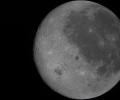
One of the most striking features in this view is the Orientale Basin, a massive impact crater about 600 miles (965 km) wide.

If it becomes a reality, the Chennai-based company will become the first private player from India to conduct such a mission to the lunar surface.
The successful Artemis II mission has boosted confidence in India's upcoming Gaganyaan mission, as both aim to demonstrate similar spaceflight capabilities. Experts highlight the collaboration between ISRO and NASA and the shared training programmes for astronauts.

NASA's Artemis II crew offers a rare look at Earth shrinking into space and the Moon coming into view during humanity's return to deep space.

From selfies to science, astronauts aboard Orion document life, work and discovery during their historic Moon flyby.

The Artemis II mission has made history as its astronauts journeyed farther from Earth than any humans before, conducting a lunar flyby and observing the moon's far side in unprecedented detail.

For the first time, there will be an Indian connection to a crewed Moon mission.
The National Aeronautics and Space Administration (NASA) on Monday said the crew of Artemis II is preparing for a historic lunar flyby that will take humans farther from Earth than ever before.

The glimpses from NASA's Artemis II mission capture a historic moment -- preparations for humanity's return to the Moon for the first time since the Apollo 17 Moon landing in 1972.

While India's interplanetary ambitions remain significant, the current pace of financial and technical progress raises questions about whether the 2027-2028 timelines can be met.

"The mission has economic and strategic value," Kalam told media persons on the sidelines of a function in New Delhi when asked to comment on the ambitious mission. He, however, refused to elaborate on it further. The lunar spacecraft Chandrayaan-I, India's first space mission beyond the earth's orbit, is scheduled for blast off on October 22 from the Sriharikota spaceport.
According to Andrew Coates of the Mullard Space Science Lab, the impactors would represent the first time there had been a detailed study of the Moon's sub-surface.
The Indian spacecraft may carry a UK component as one of the payload, British High Commissioner Michael Arthur said.
Indian space scientists will begin satellite integration for its moon mission Chandrayaan-1 this month to ascertain that the country's first-of-its-kind venture next year is on track.
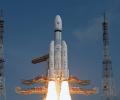
ISRO Chairman V Narayanan has emphasised the critical role of mission operations in ensuring the success of India's expanding space programme. He highlighted this at the Spacecraft Mission Operations conference, noting the importance of sustained teamwork and operational precision, particularly for long-duration missions like Chandrayaan-3 and the upcoming Gaganyaan programme.
The American agency is in talks with ISRO to place its scientific instruments on the Indian spacecraft that will be sent on an unmanned mission to the moon in 2007.
NASA plans to deploy mini-synthetic aperture radar and spectrometer with 0.3 micron to 0.9-micron capabilities in the Indian spacecraft for experiments.

The mission has three modules - Orbiter, Lander (Vikram) and Rover (Pragyan)
The final 52-hour countdown for the October 22 launch of the country's first moon mission, Chandrayaan-I, began early on Monday morning at the Satish Dhawan Space Centre at Sriharikota in Andhra Pradesh.

Four astronauts from NASA's Artemis II mission have safely returned to Earth after completing a historic flyby of the moon, marking the first human journey to the moon in over 50 years.
"We are targeting the end of June. We will try to make it in the first week of July," a senior scientist associated with the Rs 386 crore moon mission told PTI in Bangalore on Monday on condition of anonymity.

Indian Space Research Organisation chief Madhavan Nair on Saturday virtually admitted that the Chandrayaan-I moon mission could be over, saying it is a 'pretty difficult' situation. "At the moment, we have suspended the mission. Calling it off would depend on what has failed. We are trying to analyse what has gone wrong and we will take a look at it on Sunday," he said.Asked if there was any hope of the mission surviving, he said he can't confirm anything at the moment.

After days of intense activity, this phase is about staying sharp and ready for the last critical steps.
Seven months after its launch, India's maiden mission to the moon Chandrayaan has reportedly developed a technical snag. Reports suggest that the star sensor on board Chandrayaan has malfunctioned, thus partially crippling the spacecraft.Due to the malfunctioning of the critical component, it has now become difficult to steer Chandrayaan. Scientists at the Indian Space Research Organisation, which had successfully launched the moon mission, have patched two sensors.

NASA's Artemis II mission, launched on April 1, 2026, marks humanity's return journey to the Moon with four astronauts aboard the Orion spacecraft. Commander Reid Wiseman, Pilot Victor Glover, Mission Specialist Christina Koch, and Canadian astronaut Jeremy Hansen are on an approximately 10-day mission around the Moon. Stunning images from Orion's windows capture breathtaking views of Earth after the historic translunar injection burn.
A "small" fuel spill mishap when the Polar rocket with the Chandrayaan-I spacecraft atop was being fuelled created a near "scare" during the final countdown for the launch of India's maiden unmanned moon mission, ISRO Chief Madhavan Nair said.
Besides the two US payloads, Chandrayaan-I will carry five Indian instruments, three developed by the European Space Agency (ESA) and one from the Bulgarian Space Laboratory.

Luna-25 took off from the Vostochny launch facility in Russia's Far East, Russia-based TASS news agency reported.
European instruments would be included on board India's mission to the moon, Chandrayaan-1, to be launched by India's Polar Satellite Launch Vehicle.
Scrapping NASA's"Back to Moon" project, US President Barack Obama gave a new mission to the country's civilian space programme agency-a manned mission to Mars in a decade and sending astronauts to explore asteroids beyond the moon by 2025.

This incredible stockpile includes nearly every photo taken my astronauts during the missions.
Justifying the decision to scrap its "manned mission to moon", the White House has said the Obama Administration is coming out with a more ambitious and sustainable space programme, including more astronaut time in space and more rockets launching.
The teething issues concerning the launch of Chandrayaan 2 -- the second lunar mission of the Indian Space Research Organisation -- have been cleared.

The much-awaited launch of Nasa's most powerful rocket Artemis 1, which is to go on a voyage around the moon, has been deferred and teams are working on "an issue with an engine bleed."
 © 2026 Rediff.com - Advertise with us - Disclaimer - Privacy Policy - Sitemap - Feedback - About us - Terms of use - Grievances